Reverse financial planning, explained in five minutes
Goal-first modelling isn't a gimmick — it's how operators actually think. Here's the arithmetic that turns a target profit into a revenue requirement you can defend.
By The Auziplan team

Reverse planning starts at the bottom of the income statement and works up. You fix the number you care about — net profit after tax — then let every line above it become a requirement rather than a hope.
The chain, in order
- Target net profit after tax is the input, not the output
- Gross it up for company tax at your jurisdiction's rate to get profit before tax
- Add back loan interest and fixed overheads to get the gross profit you must produce
- Divide by your industry gross margin to get the revenue requirement
- Divide revenue by price to get the unit, subscriber or client count you have to win
Each step exposes an assumption you can argue about — and that's the point. Arguing about a 62% gross margin is a productive conversation. Arguing about a revenue figure someone typed in is not.
Why it changes the decision
A forward plan tells you what you might earn. A reverse plan tells you what has to be true. When the model says you need 340 customers at your current price to clear your salary, you're no longer debating optimism — you're deciding whether 340 is reachable, or whether the price is wrong.
Reverse planning doesn't make the numbers friendlier. It makes them arguable.
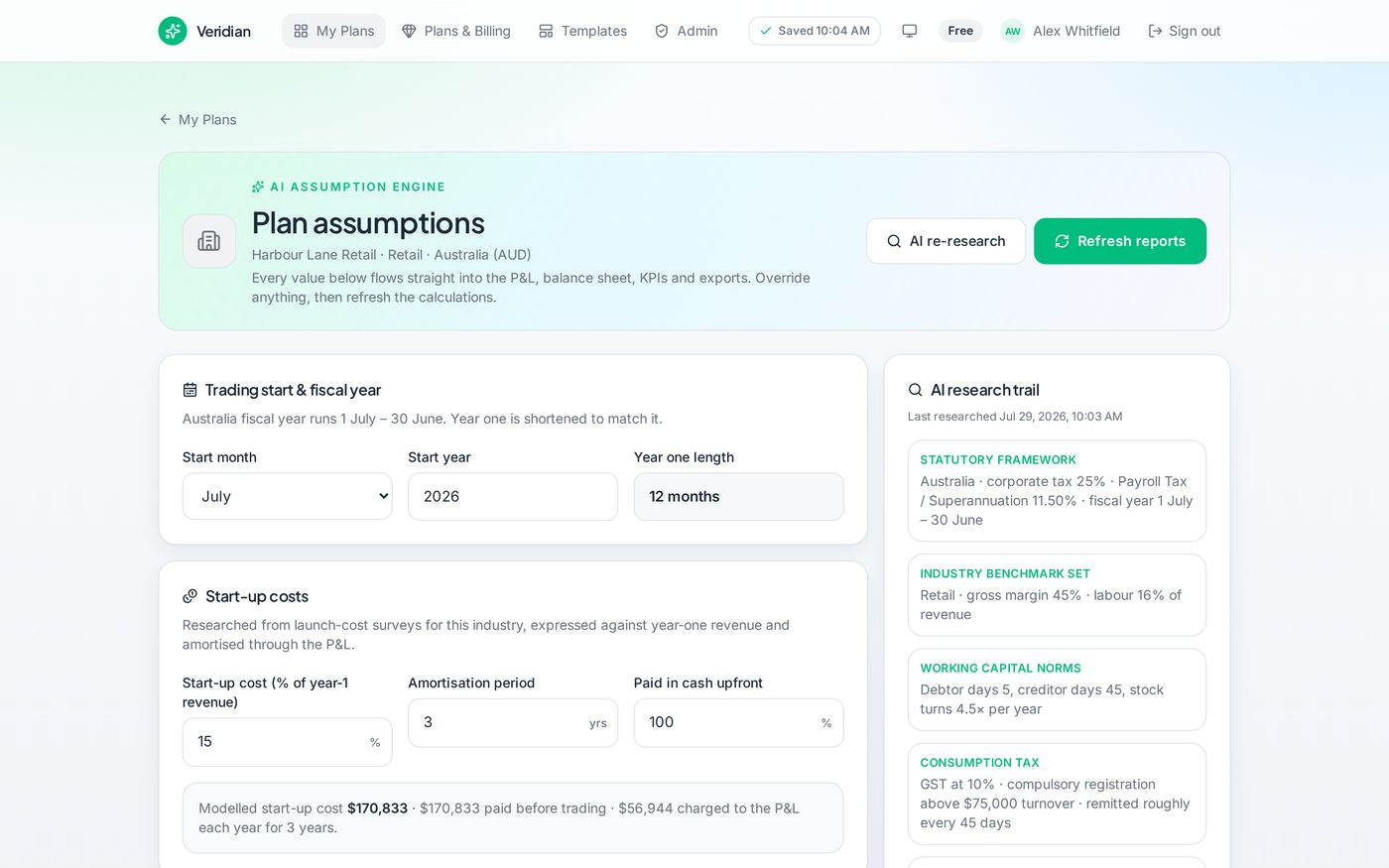
Auziplan runs this chain against real statutory rates and industry benchmarks per country, then lets you unpack and override any line it used.
Sources and further reading
- 1.Company tax rates
Australian Taxation Office
Used when grossing a target after-tax profit back to profit before tax.
- 2.Corporation Tax rates and reliefs
GOV.UK / HMRC
- 3.Margins by sector (US data)
Prof. Aswath Damodaran, NYU Stern
Public gross and operating margin datasets used to sanity-check benchmark ranges.
- 4.Financial tools and templates
business.gov.au
External links are provided for verification and point to primary sources. Rates, thresholds and multiples change — check the current figure at the source before relying on it. Auziplan publishes general information, not financial, tax, accounting or legal advice.